
How Interior Designers Are
Winning Dream Projects in 2027
It's early March 2026 when Ellie Redders gets a call every interior design firm wants.
A real estate developer is preparing to buy about 200 acres for a new project development. He needs an architect, a builder, and an interior designer. In his search for the right team, someone tells him about Ellie Redders Interiors (ERI).
“We’re looking at a few others, but please send us your portfolio.”
For the past 5 years, Ellie has spent time restructuring her firm for this exact moment.
So she didn't waste any time. She and one of her designers put together a document that shares more details about ERI’s process and portfolio.
Ellie sits back in her chair after sending the email to the investor. “This dumb little document is going to be just like what anybody else would send them. Or possibly worse.”
What made ERI special couldn’t be seen through a document.
Yes, there was:
17 years of work
A team of 10
A 6,000-square-foot design studio with a loading dock and a VR room where clients walk through homes that do not exist yet.
But you can’t experience any of that from a piece of paper or an email.
Not too long after, Ellie sent me an email. It was time for her to bring Ellie Redders Interiors to a new level and show what makes them special.
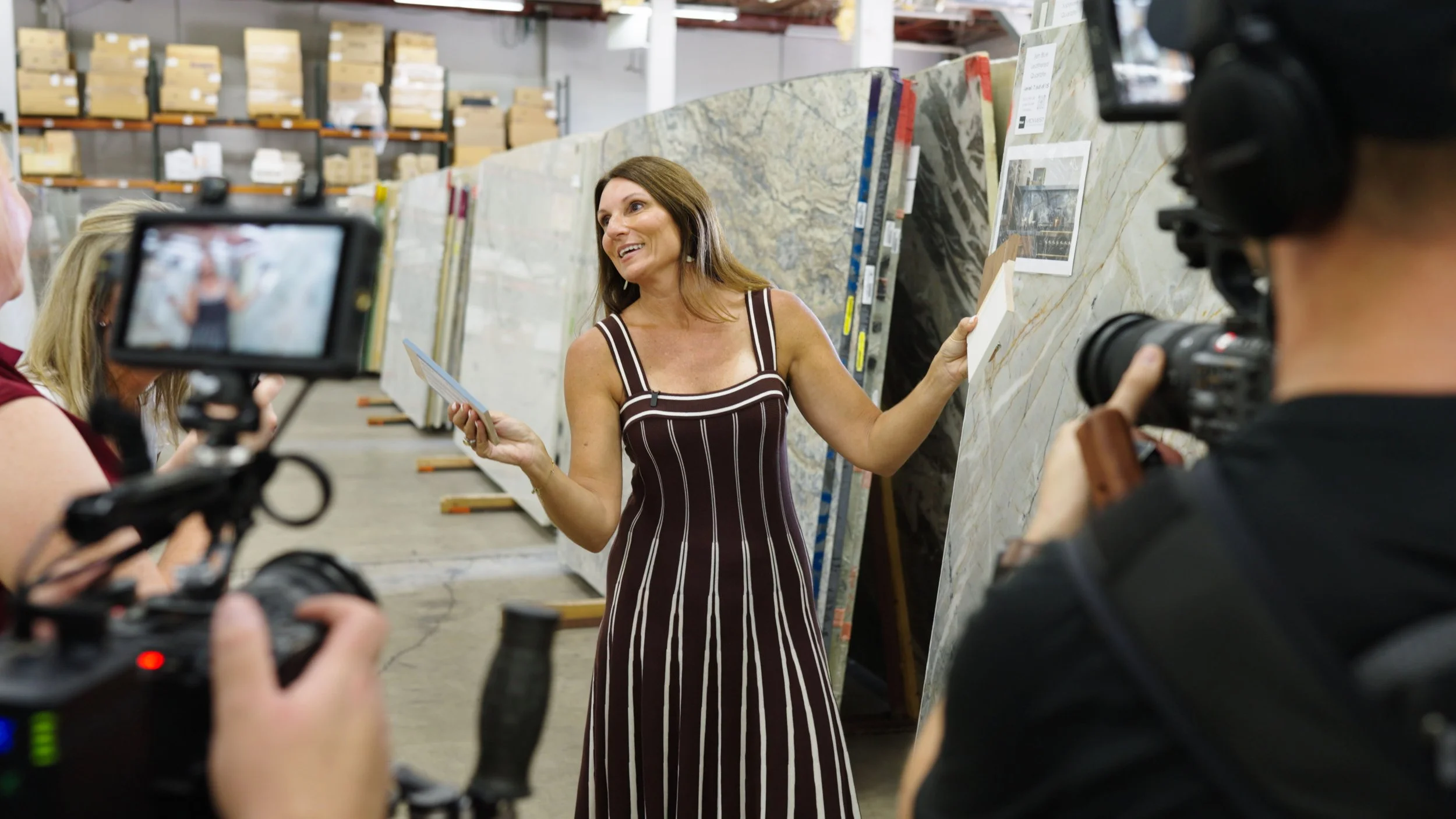
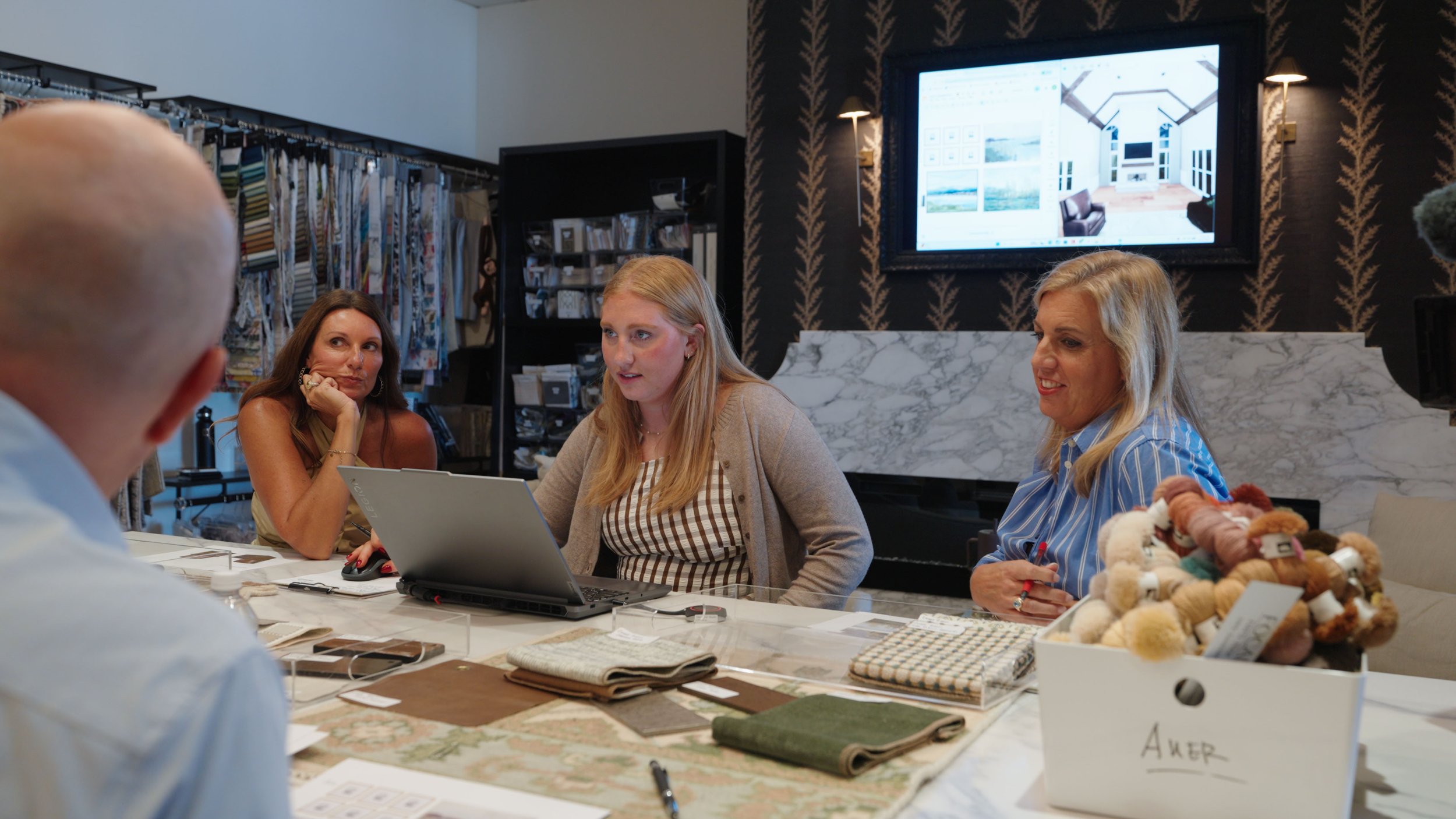
That is how my team and I ended up in St. Louis, MO to film a 3-part docuseries about Ellie Redders, her team, and the firm she built.
First, watch the 2 behind the scenes videos of this trip.
And then I’ll break it down for you.
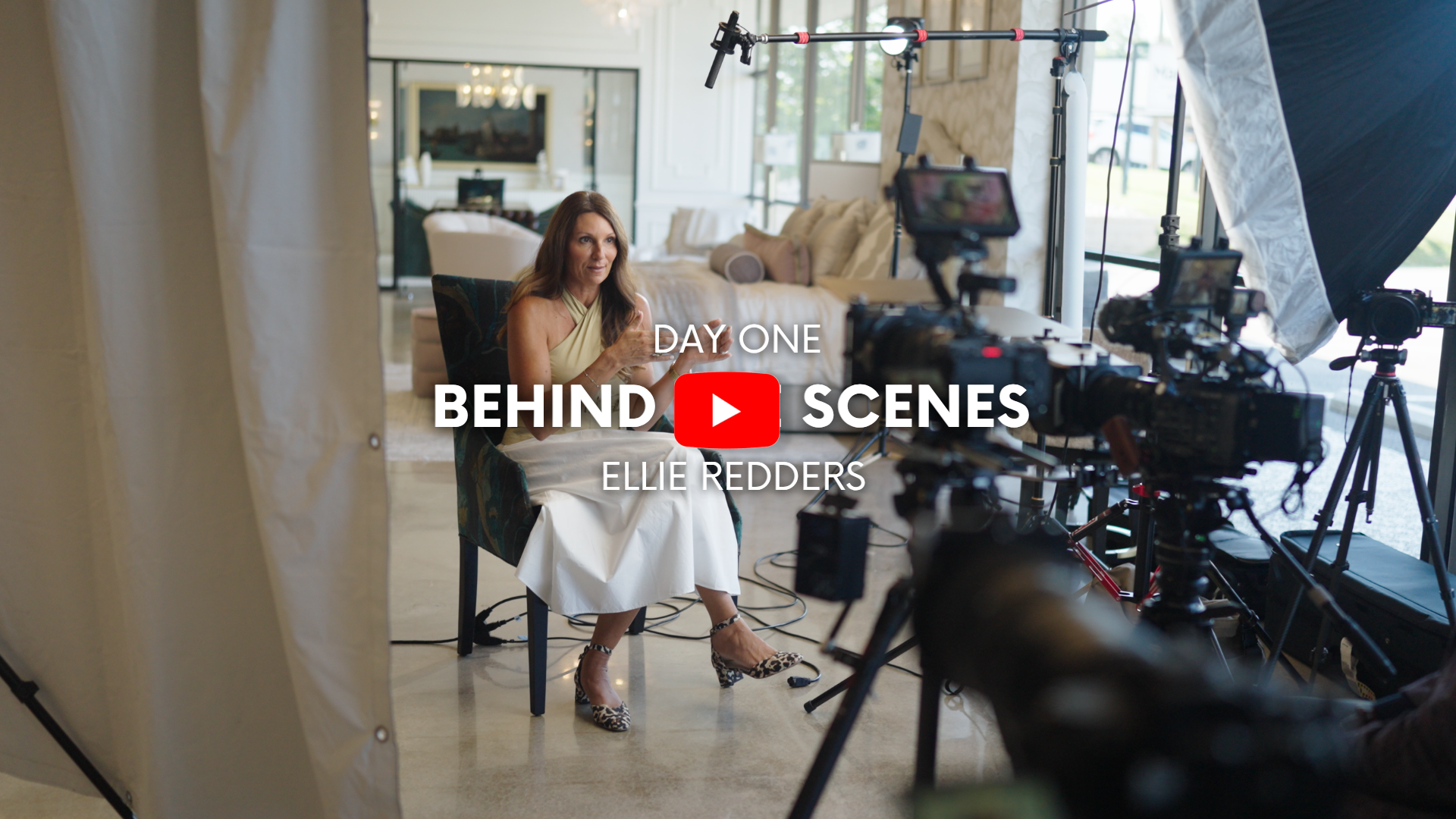
A new opportunity to show why your design firm is the only one
Ellie was no longer the one-woman show who had to meet with the clients, design every project, and manage every install.
After 17 years in business, she now had 5 other interior designers and they were running the projects.
Ellie was now the creative director.
As creative director, her team can run the projects. Only Ellie can position the firm to win the next ones.
In other words, it was time for Ellie to show up in a way that truly sets her firm apart.
Especially because most firms say the same thing.
We listen.
We lead.
We catch problems early.
We have a process.
So if everyone else is saying the same thing, and even showing the same thing through beautiful portfolio pictures, how can Ellie stand out?
Ellie's design firm is more than beautiful designs.
They're curious. They ask questions and keep asking after the client thinks they've answered.
They're calm under pressure. What they say in the hour after a piece arrives broken.
They're a family. They work together to bring a project to life. Each designer has their own project and they come together to think through solutions for other projects.
They respect their partners. Instead of telling builders and architects what they want, they also ask for their opinion. A simple "how do you think we should approach this?" goes a long way.
But how does she show all of these things in a way that is compelling? A photo simply won't get the point across.
Ellie needs a Dramatic Demonstration of Proof.
What is a Dramatic Demonstration of Proof?
Let's break it down.
In very simple terms, a demonstration is when you show how something works. You're making it visible and easy to understand.
Dramatic means "full of energy or excitement."
So then a "Dramatic Demonstration" shows how the firm works in a way that is felt and remembered.
In other words, hearing something said 1,000 times is not as powerful as seeing it once.
When they see it, it stops being an opinion. It becomes a fact the viewer now holds.
The experience is real.
Think about what the real estate developer is experiencing.
He’s built before. He knows what finished rooms look like. So that’s not what keeps him up at night. Instead, he’s deciding, “Who can I hand that much money to?” And “Who’s going to make my life easier?”
Creating a Dramatic Demonstration answers those questions and more.
I happen to create these Dramatic Demonstrations through a documentary. A long-form video that shows who the leader is, how they work, and what makes their design firm the only one to work with.
For the past 20 years, that’s what I’ve mastered. Creating documentaries for entrepreneurs who are rebranding, pivoting, or scaling.
Instead of having to prove yourself over and over in every new conversation, you’re starting from a position of strength and deep connection. Quickly removing the doubt and creating certainty.
Certainty that you know what you’re doing.
Certainty that you are authentic and real.
Certainty that you’re a joy to work with.
There are 5 kinds of Dramatic Demonstrations, but for right now I want to focus on one.
Pull back the curtain on the messy middle
Everyone is already telling the perfect story.
Scroll any designer’s feed and you see the finished picture. Nobody shows the part before the picture.
That is why Behind the Scenes is the first Dramatic Demonstration to build. Hardly anyone else is showing it because it's the part that isn't so pretty.
Yet, it's the real thing that someone like the real estate developer is buying.
Let’s go back to the second behind the scenes video I showed you earlier.
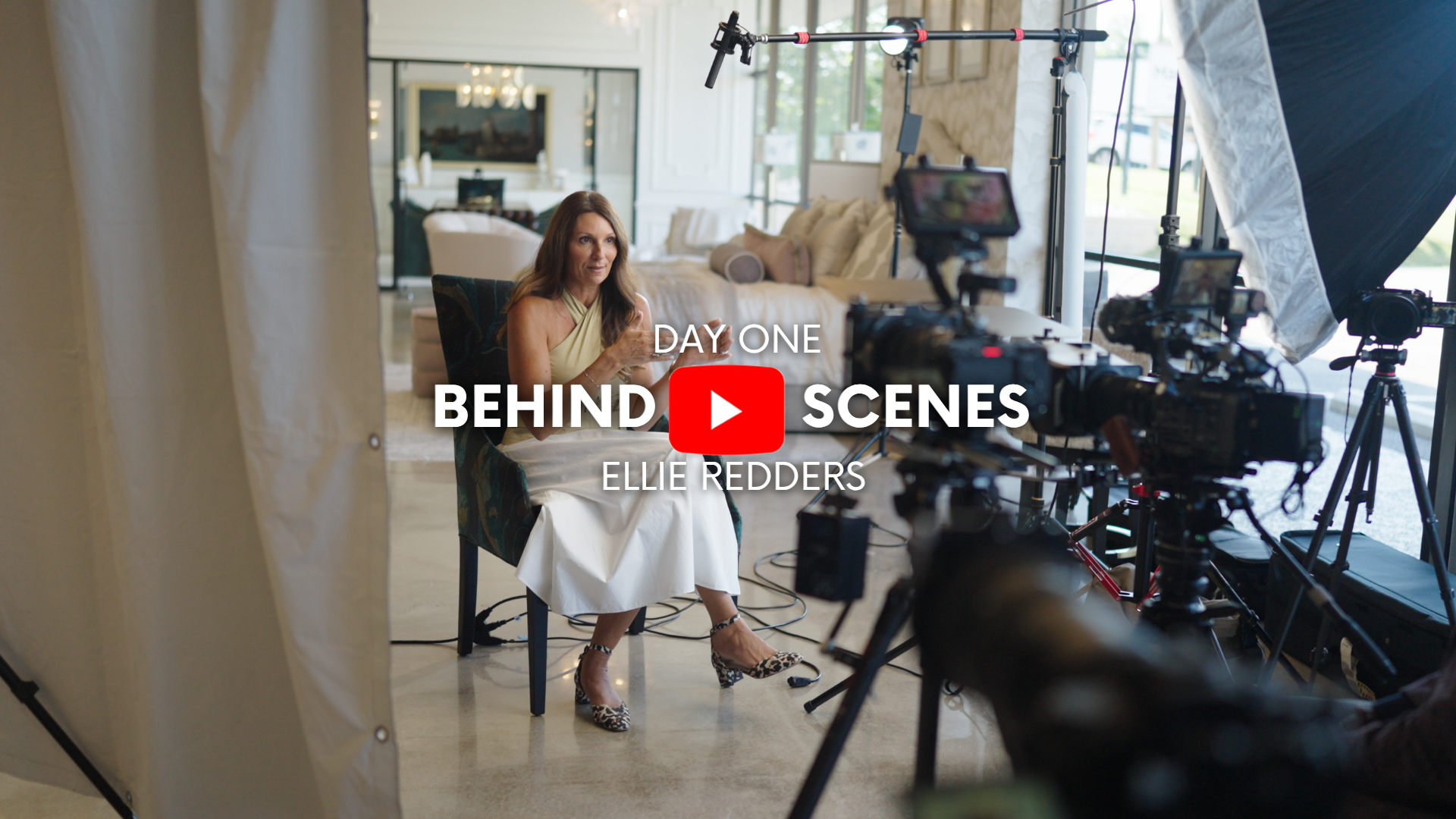
Of course, this is a Dramatic Demonstration for me and the work I do.
What did you notice when you watched?
Day 1 at a client’s home. Ellie and her designer with the homeowner, talking through a remodel in progress. Nothing is finished. They’re in the middle of it all.
Ellie speaking on her own transition and growth. She’s letting you in to how she’s leading her design firm. “I knew my position was shifting from interior designer to creative director.” The buyer learns who leads this firm, and how.
Ellie’s heart as she discovers what her work really means to her. “It’s not the filming. I’m reconnecting with people. We’re doing things that we don’t slow down enough to do.” The buyer meets the people who they’ll be partnering with to bring their own dreams to life.
Again I'll say it. The final pretty picture is not enough. When a future client can't see what really goes into your process of design or how you bring a project to life, they fill in the gap with doubt.
Doubt is expensive.
Here's what happens after filming the docuseries
So we've filmed the docuseries but now what? What happens next?
Once the docuseries is in her hands, Ellie’s entire business development model shifts in two distinct ways:
1. Eliminate the dog-and-pony show
The next time a developer, investor, or homeowner says, “Send us your portfolio,” the PDF still goes out.
But now, it also includes her docuseries.
Before Ellie ever hops on a Zoom call or steps onto a job site, the client has already watched 15 minutes of her in the trenches.
They’ve seen her team solving problems on active construction sites.
They’ve seen her 6,000 sq. ft. studio.
They’ve heard past clients explain what life was like with ERI in their corner.
The dynamic of the first meeting completely flips:
She is no longer auditioning from scratch.
She is not defending her design fees or explaining her line items.
The search is already over. The meeting is just a confirmation.
2. Turning trade partners into your sales force
The biggest missed opportunity in interior design is treating builders and architects like an outside force working against you.
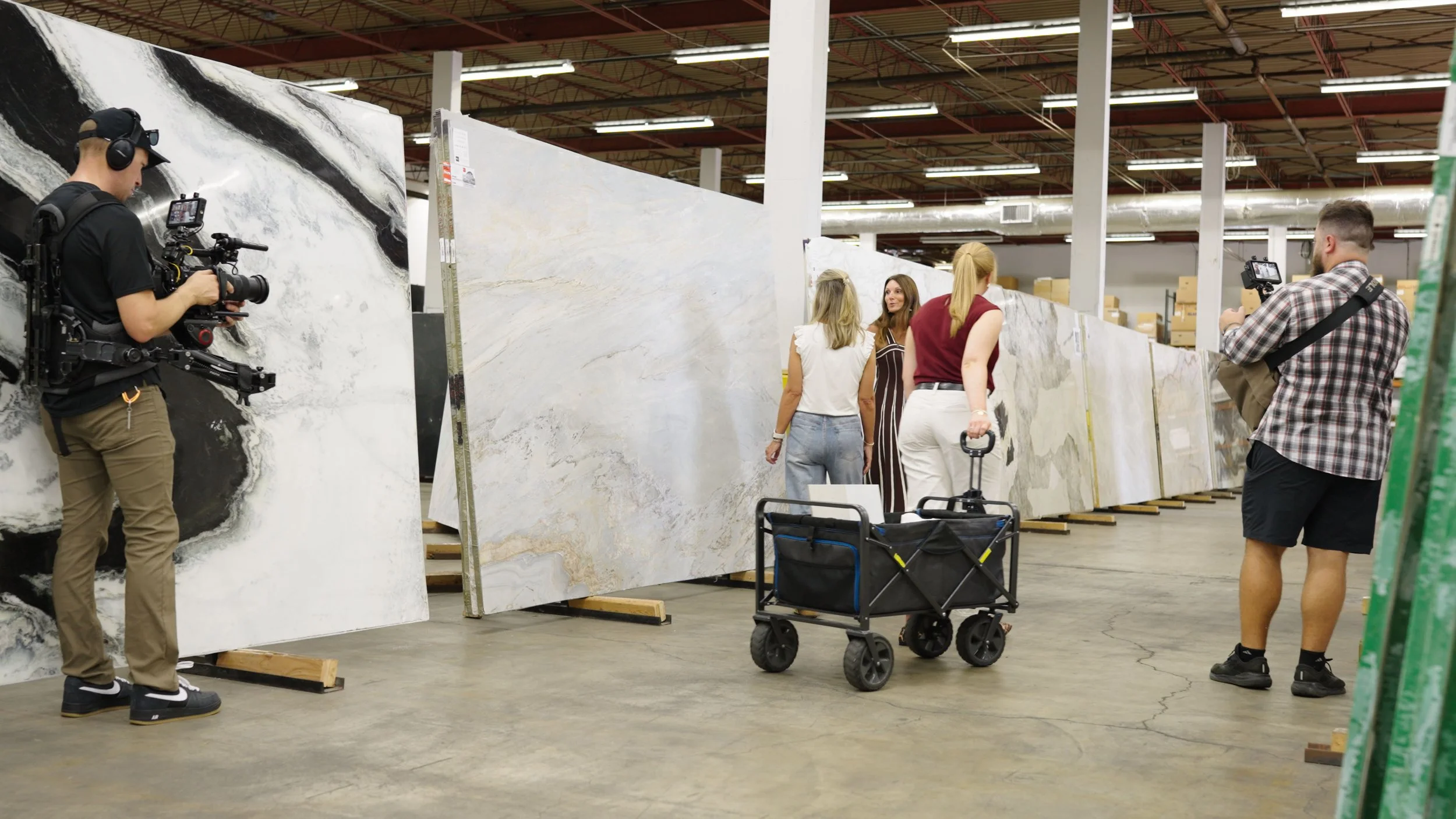
In Ellie’s docuseries, we didn’t just put Ellie on camera. We put her partners on camera.
We interviewed the contractors she collaborates with daily. They talked about how buttoned-up her construction drawings are, how her team catches structural discrepancies before permits are pulled, and how much smoother their job sites run when ERI is on the project.
Think about what happens when you feature a custom home builder as a co-star in your documentary:
You give them an asset they are proud to share. That builder sends Ellie's film to their prospective clients to prove the caliber of the team they build with.
You eliminate competition and work smarter. Why would that builder ever refer another interior design firm when you've gone out of your way to feature them on film?
By documenting the collaboration, Ellie fortified a referral engine with the premier builders in her market.
Stop auditioning from scratch
Most interior designers and custom builders are still operating from an old marketing principle that is 10 years out of date:
Take pretty pictures, build a portfolio, and let the work speak for itself.
It doesn't work.
In the luxury market, high-net-worth homeowners aren’t buying finished rooms. They are buying the human being they trust to guide them through a multi-year financial and emotional investment.
When you rely on static pictures and generic proposals, you force yourself to start at zero and audition from scratch in every new conversation.
You can keep sending the document that every other designer sends.
Or you can give them a Dramatic Demonstration of Proof and let them meet you before they ever meet you.
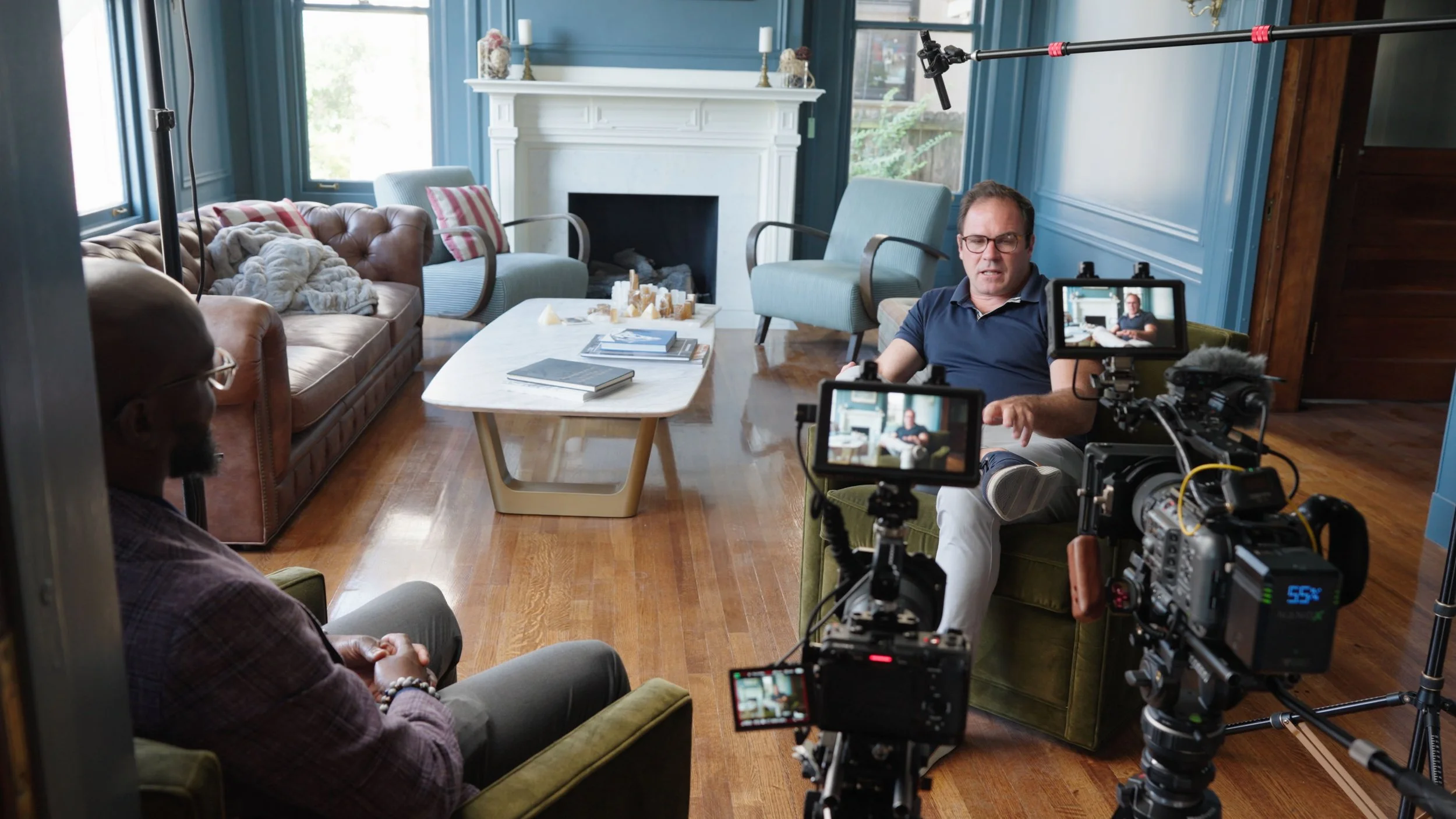
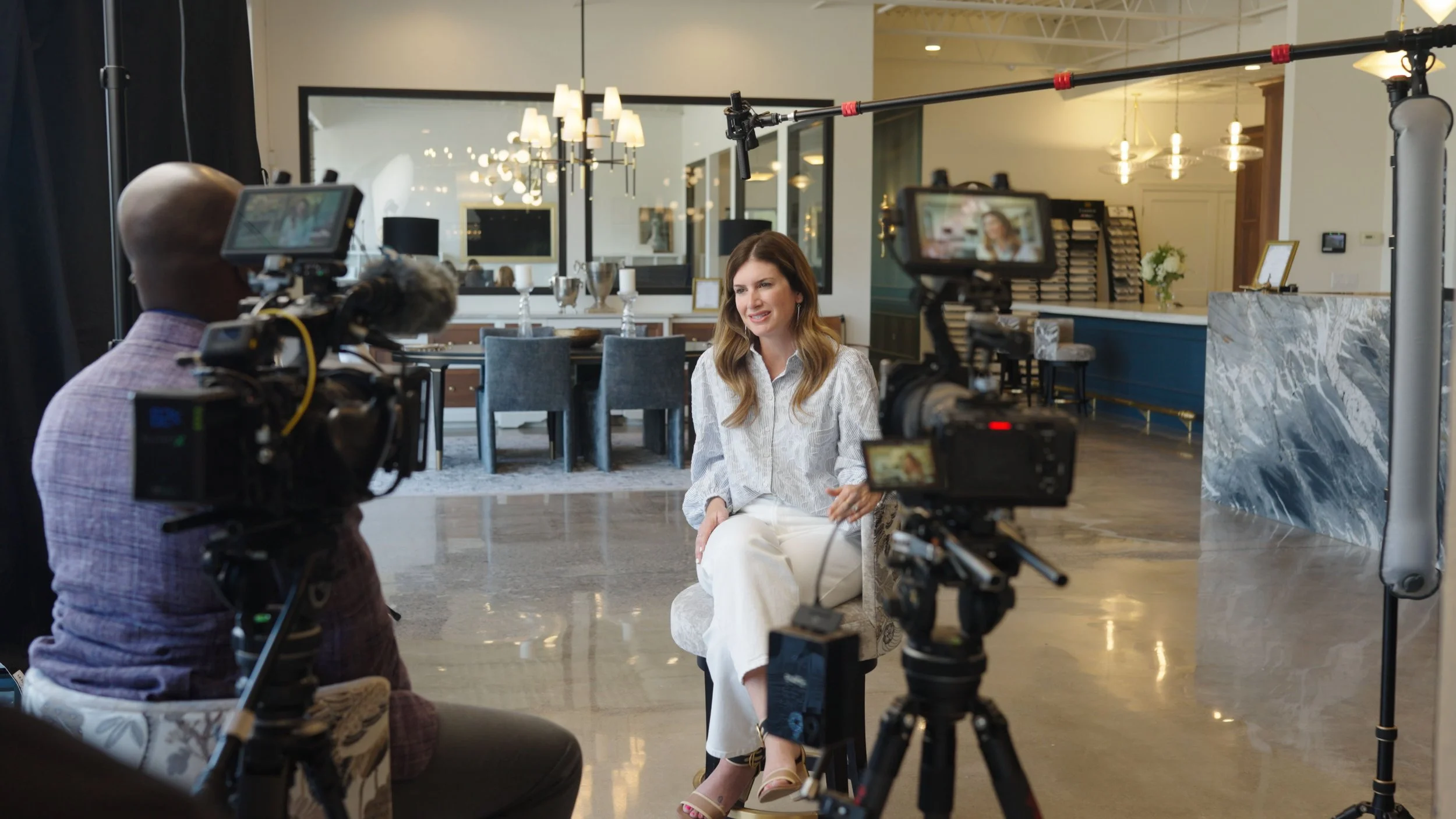
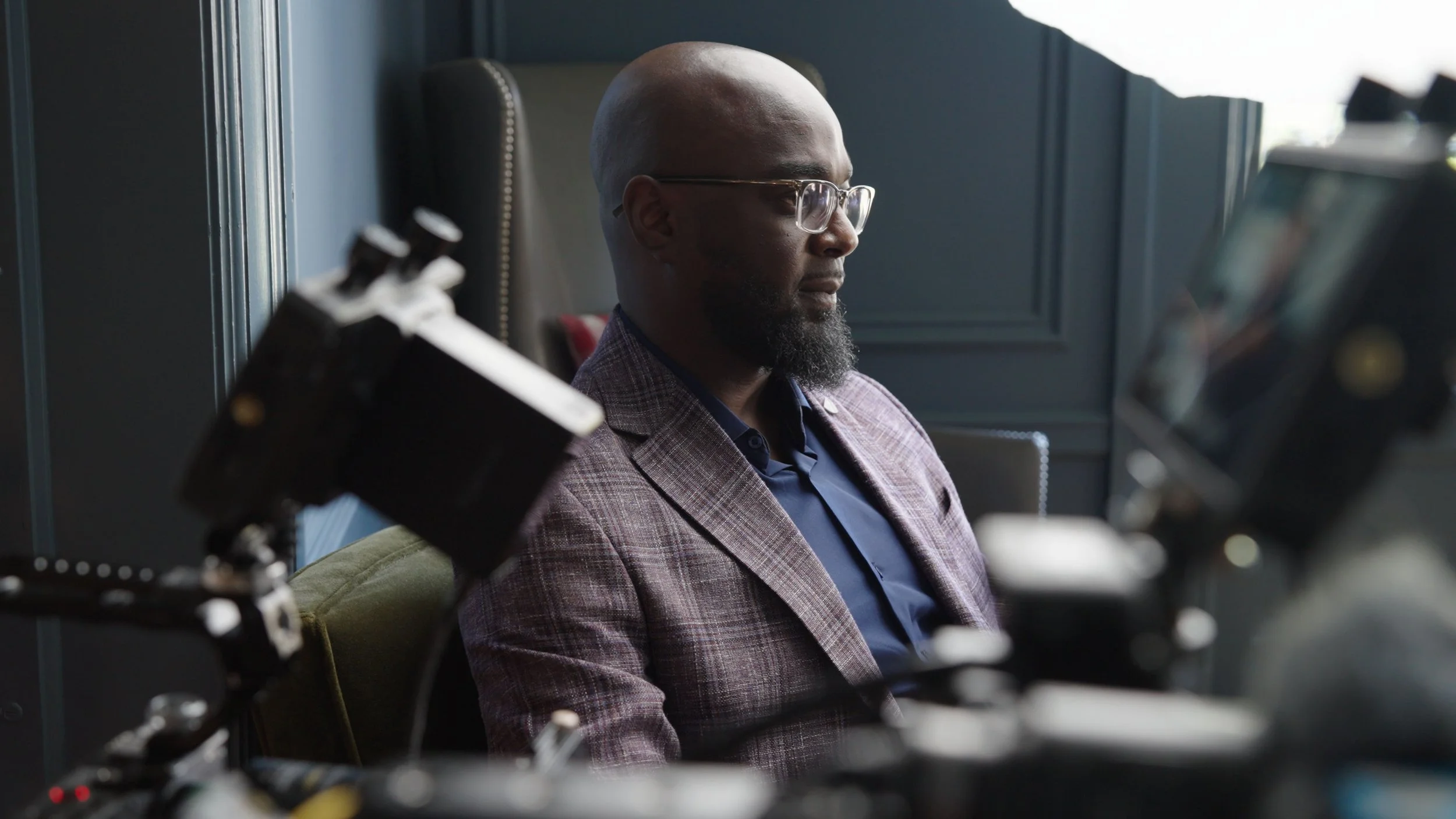
JudeCharles interviewing a homeowner for Ellie Redders' docuseries
My name is Jude Charles. I create documentaries for interior designers, like Ellie Redders, who are rebranding, pivoting, or scaling.
You just saw behind the scenes of how the docuseries came together. That is how Ellie stands out from other design firms. Not with her portfolio. With who she is and how she works.
Tired of proving yourself over and over? Let’s talk about how to make it easier for new clients and partners to say YES.